
The Role of AI in Modern Construction
Artificial Intelligence is increasingly becoming a cornerstone in the construction industry. With its ability to analyze vast amounts of data and predict outcomes, AI is reshaping how contractors plan and execute projects. This technological advancement not only streamlines processes but also mitigates risks, ultimately leading to safer and more efficient construction sites.
Enhancing Safety with AI Technology
Safety is paramount in construction, and AI plays a crucial role in enhancing it. AI systems can monitor sites in real-time, identifying potential hazards before they become critical. These systems utilize machine learning algorithms to predict and prevent accidents, ensuring a safer working environment for all employees.
AI and Project Management Optimization
Project management in construction has been significantly improved through AI. By using predictive analytics, AI helps in forecasting project timelines and budgets with greater accuracy. This allows contractors to allocate resources more efficiently and avoid costly overruns. The integration of AI into project management tools ensures that projects are completed on time and within budget.
Drones and Robotics in Construction
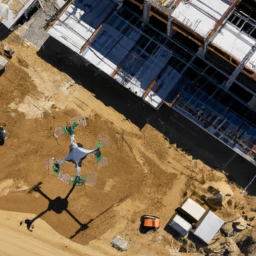
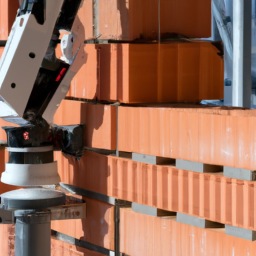
Drones and robotics are two of the most visible applications of AI in construction. Drones provide aerial views of construction sites, enabling precise mapping and monitoring. Robotics, on the other hand, are used for tasks ranging from bricklaying to concrete pouring, increasing efficiency and precision. These technologies reduce the need for manual labor, allowing workers to focus on more complex tasks.
AI-Driven Analytics for Resource Allocation
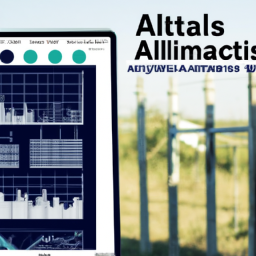
Resource allocation is a critical aspect of construction management, and AI-driven analytics offer a solution. By analyzing data from past projects, AI can predict resource needs and optimize their use. This not only reduces waste but also ensures that all necessary materials and personnel are available when needed, preventing delays and improving project outcomes.
The Future of AI in Construction
The future of construction is inextricably linked to AI. As AI technologies continue to evolve, their applications in construction will expand, offering new opportunities for efficiency and innovation. Contractors who adopt AI early will have a competitive edge, as they will be able to complete projects faster and more cost-effectively than those who do not.
Challenges in AI Adoption
Despite its benefits, the adoption of AI in construction is not without challenges. One of the main hurdles is the high cost of AI technologies, which can be prohibitive for smaller firms. Additionally, there is a learning curve associated with integrating AI into existing workflows, requiring training and adaptation. However, as AI becomes more prevalent, these barriers are likely to diminish.
AI and Sustainable Construction
Sustainability is a growing concern in construction, and AI can play a significant role in addressing it. By optimizing resource use and minimizing waste, AI contributes to more sustainable construction practices. Furthermore, AI can help design energy-efficient buildings, reducing the environmental impact of construction projects.
AI-Powered Design and Architecture
AI is revolutionizing design and architecture within the construction industry. Through generative design, AI can create optimized building designs that take into account various factors such as sunlight, wind patterns, and energy efficiency. This leads to innovative structures that are both functional and aesthetically pleasing.
Conclusion: Embracing AI for a Better Future
The construction industry stands on the brink of a technological revolution, with AI at its forefront. By embracing AI, contractors can improve safety, efficiency, and sustainability, paving the way for a future where construction projects are completed faster, safer, and with less environmental impact. The potential of AI in construction is vast, and those who harness it will lead the industry into a new era of innovation.